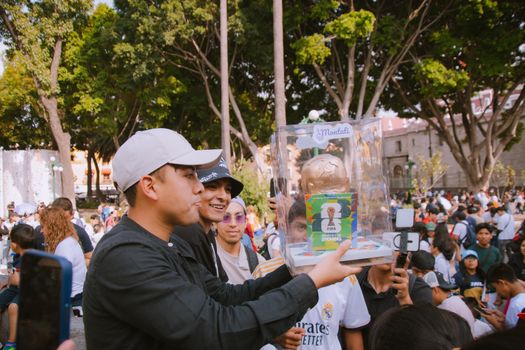
Even though football fans travel to North America to watch their favorite team compete in the FIFA World Cup, those that find themselves in the United States of America indulge in the cultural oddities.
Many are purchasing items that are banned overseas, such as melatonin, whitening strips, and EOS Lotions. Europeans, especially, are shocked by the grand size of shops and markets. “‘We had to go to Target. I mean, it was one of the biggest shops I’ve ever been in,’” shares 23-year-old Englishwoman Abbey Dudley, who posted an American shopping haul on TikTok, “‘And people in the comments were like, ‘Why are you bothered about going to a Target?’ It’s literally just a normal supermarket for them, but it was so cool to experience’” (Business Insider).
While these small spending endeavors by foreigners drive some economic movement, the money spent on lodging and transportation creates big changes in the fiscal flow. According to Forbes, Boston and Los Angeles have seen a 20% and 90% boost in spending, respectively. Aside from the inevitably raised hotel prices during game dates, tourists are apt to spend more on new experiences.
Additionally, Airbnb has projected a $2.6 billion host revenue for host cities across the USA, and VRBO hosts in Dallas and Atlanta have seen revenues up to 78% greater than the previous summer. In Kansas City, VRBO hosts have an expected collective hosts earning of $6 million.
Despite the fact that this economic boom is localized to certain cities, this stream of new money into the American system will have great benefits. Local restaurants, bars, and shops will see increased foot traffic due to more visitors. Tourism purchases also generate tax dollars at the local, state, and national levels. These tax dollars can be reinvested in a multitude of ways, including the improvement of infrastructure, the offsetting of constructional cost, and the funding of local community programs.
All in all, the inputting of dollars into the economy creates circulation. The $20 spent on a meal by a German tourist goes to the restaurant owner, who then uses that income to buy more supplies from vendors, or hire more employees.