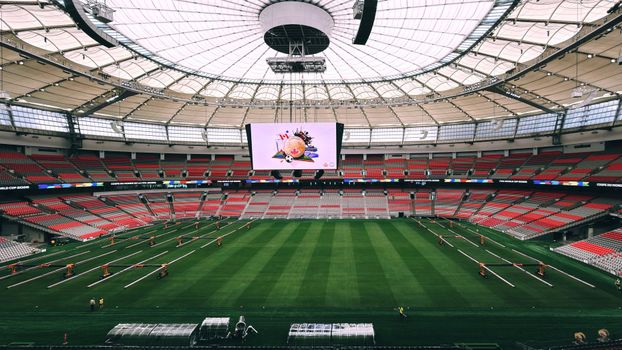
For one month, the 2026 FIFA World Cup transformed cities across Canada, Mexico, and the United States into centers of global attention. Hotels filled, restaurants welcomed international visitors, and fans traveled across borders to watch the first men’s World Cup featuring 48 teams and three host countries. (FIFA)
From the outside, hosting the World Cup appears to be an obvious economic victory. More visitors should mean more spending, more jobs, and more publicity. However, economists ask a harder question: does the money entering a host city outweigh the public costs and economic disruptions required to hold the event?
The answer depends on more than how crowded the streets look during match week.
The Promise of a World Cup Boom
Before the tournament, an economic analysis published through FIFA and the World Trade Organization estimated that the 2026 World Cup could contribute up to $40.9 billion to global gross domestic product and support nearly 824,000 full-time-equivalent jobs. The study projected $17.2 billion in additional GDP for the United States alone. (Inside FIFA)
These estimates include three types of economic activity.
Direct spending comes from visitors purchasing hotel rooms, food, transportation, and tickets. Indirect spending occurs when businesses serving those visitors purchase more supplies or services. Induced spending happens when workers earning income from the event spend some of that money elsewhere in the economy.
This process is often described as the multiplier effect. A tourist buys dinner, the restaurant purchases more ingredients, and an employee later spends their wages at another local business. One original purchase appears to create several rounds of economic activity.
Early evidence from Boston suggests that the tournament clearly benefited some industries. During part of the World Cup period, Greater Boston’s average hotel rate rose approximately 21 percent compared with the same period in 2025, while revenue per available room increased around 20 percent. On match days, average room rates rose even further. (Inside FIFA)
For hotel owners and restaurants located near the action, those numbers represent a real financial boost.
Why Full Hotels Do Not Tell the Whole Story
A rise in tourism revenue does not automatically mean the entire city became richer.
One reason is the substitution effect. Local residents have limited money to spend. A family that buys expensive World Cup tickets may cut spending on movies, restaurants, or other entertainment. The tournament creates revenue for one business while reducing it for another.
There is also crowding out. Regular tourists may avoid a host city because they expect higher prices, traffic, or packed hotels. Residents may also stay home or leave the area during the event. Some World Cup visitors therefore replace people who would have spent money in the city anyway.
Another issue is leakage. Not every dollar spent remains in the local economy. Revenue may flow to international hotel chains, event organizers, outside contractors, or companies headquartered elsewhere. An economic-impact study that counts the full price of every hotel room may overstate how much income actually reaches local residents.
The International Monetary Fund has warned that forecasts for mega-events frequently exaggerate expected benefits by misusing multipliers, overlooking leakages, and underestimating hidden costs. Its review of past events found that projections made before tournaments have often been more optimistic than the results measured afterward. (IMF)
The Opportunity Cost Problem
The most important cost may not appear on a World Cup invoice.
In economics, opportunity cost means the value of the best alternative that was not chosen. When a government spends money on security, transportation, stadium improvements, or event operations, that money cannot simultaneously fund schools, housing, healthcare, or other public services.
That does not mean all World Cup spending is wasteful. A new train line that residents use for decades may create genuine long-term value. Improvements to airports, public transportation, and public spaces can benefit a city long after fans leave.
The key question is whether the infrastructure was already needed.
A stadium built mainly for a short tournament can become a costly “white elephant” if it receives little use afterward. A transportation project that connects underserved neighborhoods, however, could produce benefits far beyond sports.
An IMF analysis of 27 major sporting events found that actual economic results often differed from expectations, particularly when governments experienced spending overruns or built underused facilities. The report emphasized fiscal discipline, useful infrastructure, private-sector risk sharing, and long-term planning as essential for producing lasting returns. (IMF)
What Can Previous World Cups Teach Us?
The 2022 World Cup in Qatar demonstrates why the answer can be complicated.
The IMF estimated that visitor spending and broadcasting revenue contributed approximately 0.7 to 1 percent of Qatar’s GDP during the tournament year. That was meaningful, but relatively small compared with the enormous amount of attention and investment surrounding the event. (IMF)
Qatar’s longer-term strategy depended less on ticket sales and more on infrastructure, tourism, international visibility, and diversification beyond oil and gas. Whether those investments ultimately succeed will depend on how frequently the country’s new transportation systems, hotels, and facilities are used in future years.
This distinction matters for North America. Unlike some previous hosts, the United States, Canada, and Mexico already possessed many large stadiums and established transportation networks. That may reduce the risk of constructing expensive venues that have no purpose after the tournament.
Still, each host city faces a different calculation. A city that spent little and attracted heavy tourism may see a strong return. Another city could experience high security and transportation costs without receiving enough visitor spending to compensate.
So, Did the Hosts Win?
In the short term, many hotels, restaurants, airlines, and entertainment businesses almost certainly did.
The broader economic verdict will take longer.
A successful World Cup should not be measured only by packed stadiums or expensive hotel rooms. Economists must examine how much spending was genuinely new, where the money went, how much taxpayers contributed, and whether infrastructure remains useful after the final whistle.
The 2026 World Cup may create valuable tourism, employment, and global exposure. But the tournament’s true legacy will depend on what remains once the crowds disappear.
In sports, a winner is determined when the match ends. In economics, the final score may not be known for years.